
Finishing a course feels good — you've built a new skill, maybe even made a few solid practice batches or projects. But there's often a quiet gap between "I completed the training" and "I'm running a business." Closing that gap is where many learners stall. Here's how to bridge it, step by step.
Step 1: Don't Wait to Feel "Ready"
One of the biggest traps after finishing a course is waiting to feel fully confident before taking action. The truth is, confidence usually comes after you start, not before. Your first real product or client doesn't need to be perfect — it needs to exist.
Give yourself permission to start imperfectly. Adjust as you go.
Step 2: Make Your First Product or Offer Your First Service — Even Just for Practice
Before selling anything, do a small trial run:
- Make a small batch of your product, or offer your service to one or two people
- Treat it exactly as you would a real customer order — same process, same care
- Use this as a chance to time yourself, refine your process, and spot any gaps in your understanding
This step turns course knowledge into practical, repeatable experience.
Step 3: Get Honest Feedback Before You Launch Publicly
Share your first product or service with a small, trusted group — friends, family, or fellow learners from your course. Ask specific questions:
- Would you pay for this? How much?
- What would make you choose this over an alternative?
- Is anything unclear, uncomfortable, or in need of improvement?
Honest feedback at this stage is far more valuable than praise — it's how you catch issues before they reach paying customers.
Step 4: Set Up the Basics to Sell
You don't need a polished business from day one, but you do need the essentials in place:
- A simple way for people to see what you offer (WhatsApp catalog, social media page)
- Clear pricing, calculated properly (not guessed)
- A simple way to receive payment, like M-Pesa
- Basic packaging or presentation, even if simple
Step 5: Make Your First Real Sale
This is the milestone that matters most — not because of the money, but because it confirms your skill has real market value. Celebrate it, and pay close attention to how it went: what worked, what felt hard, what you'd do differently next time.
Step 6: Build a Simple Routine Around the Business
Once you've made a few sales, start building light structure:
- A consistent time set aside for production or service delivery
- A simple way to track orders, income, and expenses
- A regular habit of following up with past customers
This is what starts turning occasional sales into a functioning, repeatable business.
Step 7: Keep Learning as You Grow
The skill you learned is a foundation, not a finish line. As you gain real business experience, revisit areas where you feel less confident — whether that's advanced technique, pricing, marketing, or formal registration — and keep building on what you know.
Step 8: Reflect on How Far You've Come
It's easy to focus only on what's next and forget to acknowledge the shift that's already happened: from someone with an interest, to someone with a skill, to someone actually running a business. That progression is the hard part — and you've done it.
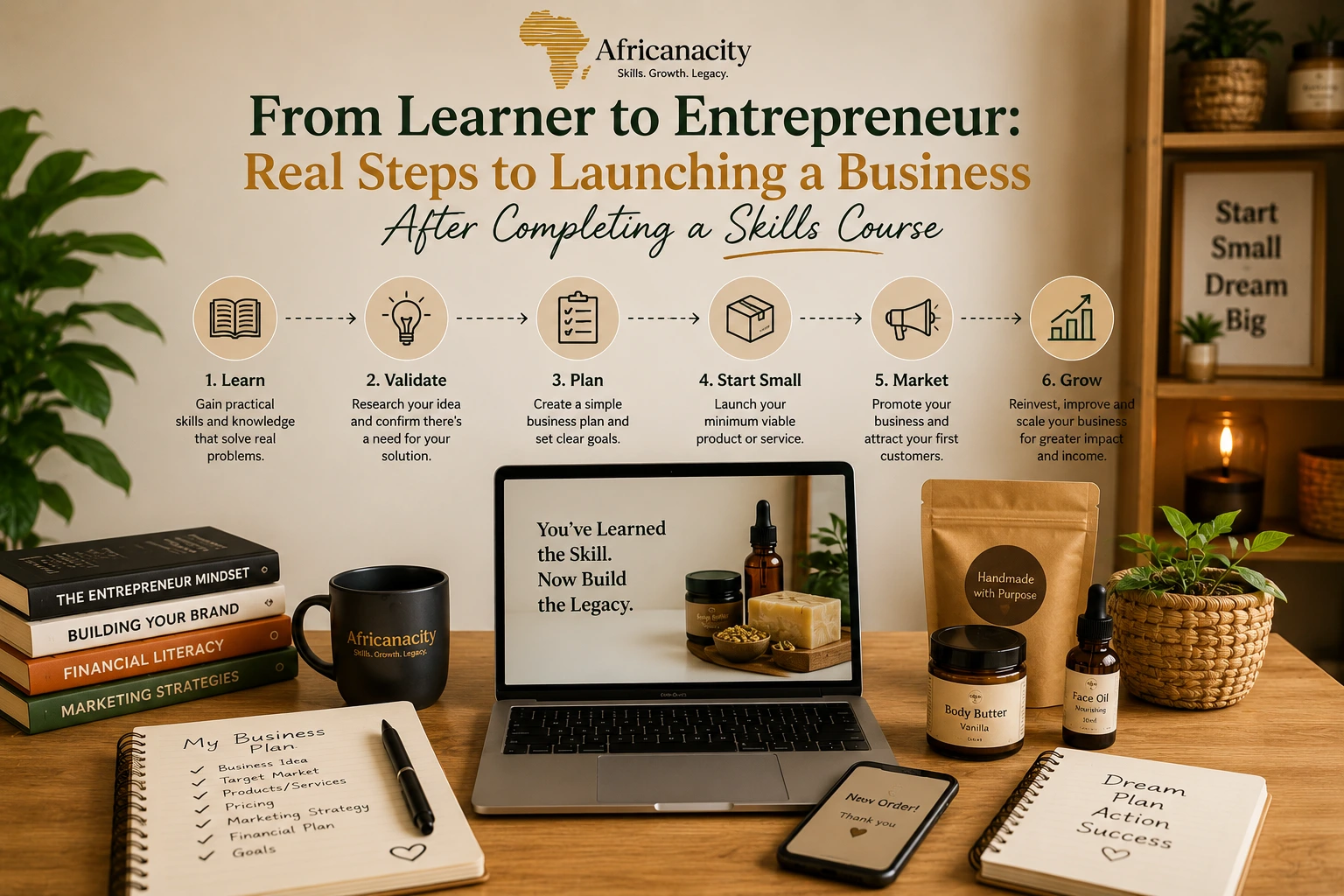
The Gap Between Learning and Earning Is Smaller Than It Feels
Most of what stands between finishing a course and running a business isn't more knowledge — it's simply starting, adjusting, and continuing. You don't need to have it all figured out before you begin; you need to take the next small, honest step.
If you're ready to take that step, My Skill-Up Hub's courses are designed to prepare you not just with the skill, but with the practical business foundation to launch with confidence.